I don’t care about the how (it works in the background), I care about the what (I experience).
Example: Social media
I care about my friends and want to stay connected.
I care about status and want to appear clever to people I admire.
I want to learn useful skills and live a better life.
Platforms like instagram or twitter bundle what I care about (an interface for connecting with friends or bragging online to strangers, a frictionless onboarding flow, as little cost as possible) with what I don’t care about (how the above is delivered to me in terms of infrastructure and sofware/protocols).
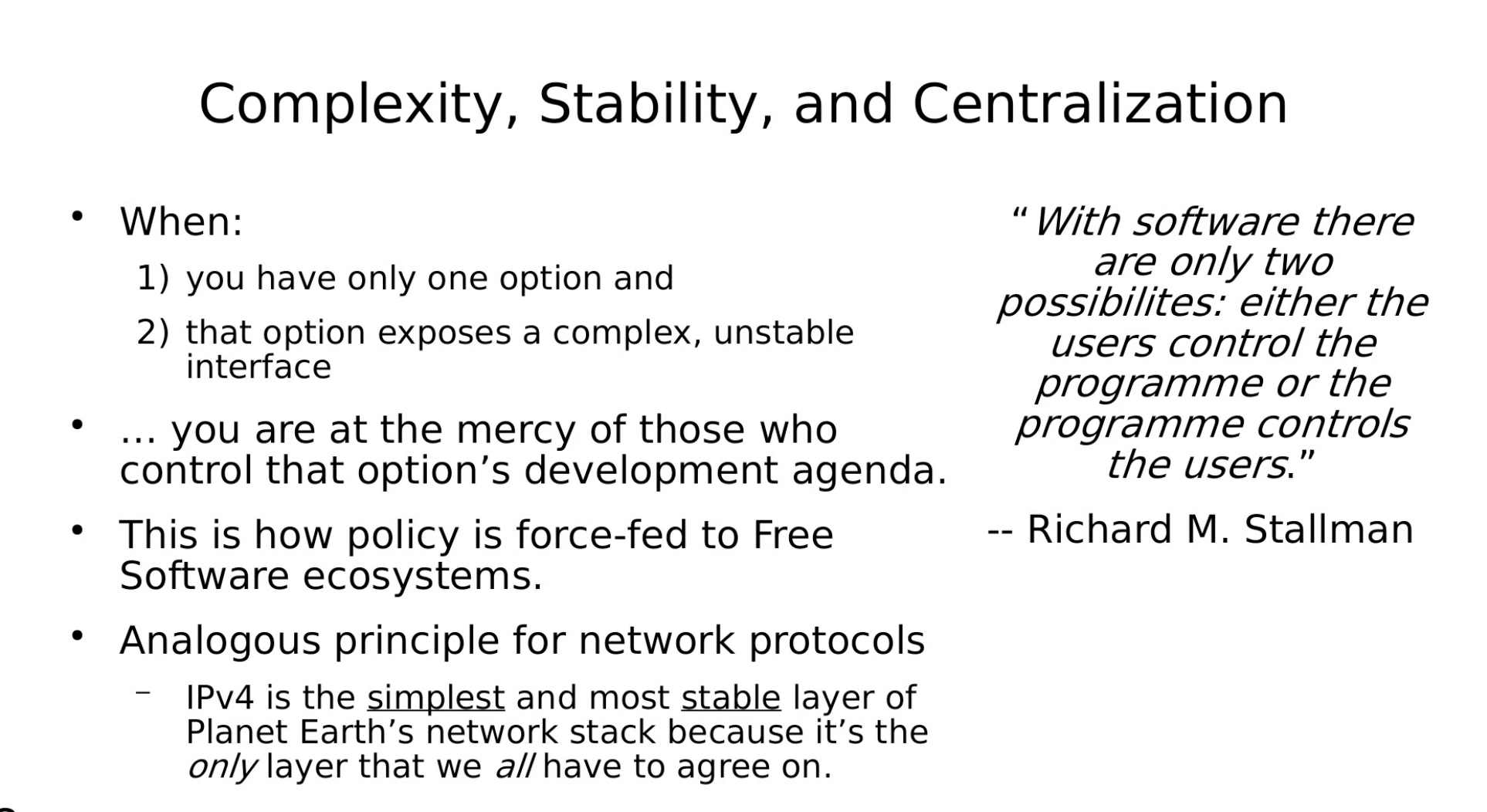
The problem starts if what I care about (the interface) gets worse and worse because incentives are not aligned between me and the company that develops it.
A platform as a bundling of things I care about and things I don’t care about is bad if there is no alternative. A platform as a bundling of things that allows me to switch to better alternatives is not a platform, but a protocol with a client.
I want the thing I care about to be as stable as possible and only change with broad consensus of people like me/similar incentives. Bitcoin/Nostr and protocols like them are an ideal ground to rely upon. Only if the majority of users decide a switch is good, it will happen.